This is the final post in a four-part series on the organizational conditions that determine whether AI adoption produces real performance. Earlier posts introduced the Calibrator and Automator archetypes, examined how leadership communication shapes AI behavior, and showed how managers' use of time saved by AI determines team performance.
Think about the last time someone at work remembered something you said three weeks ago and brought it up again. It’s likely the gesture made you feel good because it shows that person was actually listening to what you had to say.
That feeling, the sense that what you contribute actually counts, is called mattering and it’s a critical part of creating conditions for human performance in an AI era.
BetterUp Labs tracked mattering across more than 92,000 workers and found it’s declining faster than other indicators of performance such as engagement, well-being, productivity, and stress.
Depleted mattering shows up in observable behaviors before it even registers in engagement surveys: the employee who stops raising concerns in meetings or the manager who starts routing developmental conversations to AI because investing in that relationship no longer feels worth the effort.
These behaviors crop up frequently when organizations undergo large-scale culture transformations. Fear of irrelevance expresses itself as armor, and armor kills the experimentation and productive challenges that AI adoption depends on, notes Brené Brown, research professor and chair of BetterUp's Center for Daring Leadership,
Trust as the mechanism for mattering
Mattering is the core of what BetterUp Labs calls psychological fuel: the motivation, optimism, and agency that power performance under pressure. When fuel depletes, the ability to experiment, exercise judgment, and adjust in real time goes out the door, too.
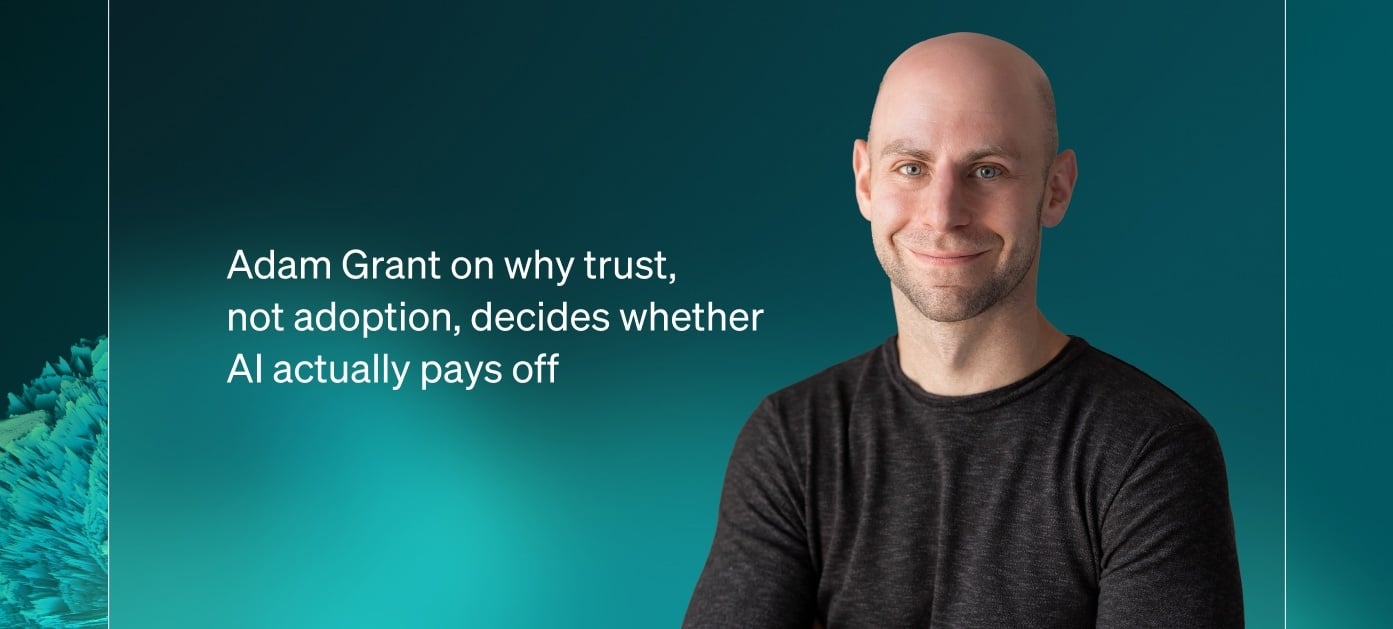
Trust is the condition that can bring mattering, and therefore psychological fuel, back. When people believe their leaders are investing in them rather than readying their replacements, they approach new tools with agency rather than anxiety.
High trust in leadership increases an organization's odds of landing on the augmentation path rather than the automation path by 46%.
Trust isn’t a culture initiative, but the result of alignment between what you say and what you do, and whether people feel that their presence in the organization is valued.
What building mattering at scale requires
The organizations that make people feel they matter at scale share three characteristics:
- A clear strategy that gives AI adoption a purpose beyond efficiency
- A culture of trust and development that creates the conditions for genuine experimentation
- AI maturity that extends beyond individual adoption to team-level practice
These characteristics are built through sustained organizational commitment. At Lumen Technologies, for example, building a culture of trust required taking a hard look at how leaders were actually behaving.
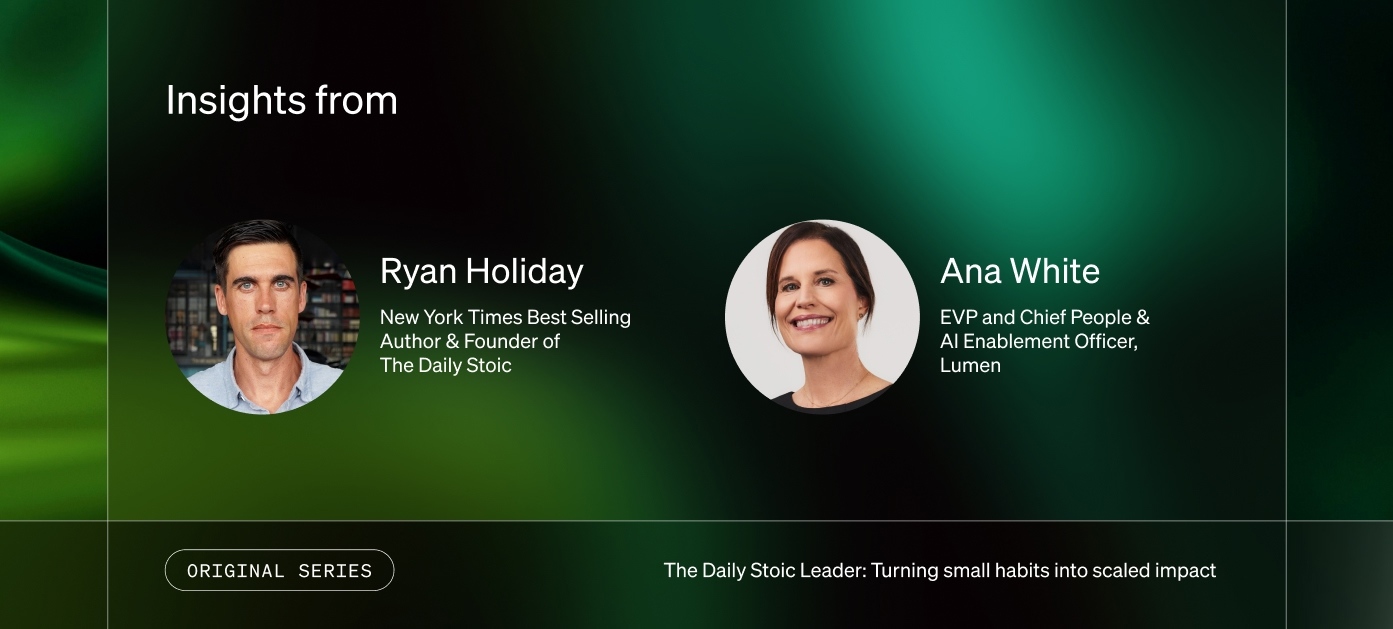
When Ana White joined Lumen, the company was navigating declining revenue, a declining stock price, and inertia that came from years of playing not to lose. A new CEO, Kate Johnson, had come in, driving a hard reset of both the business and the culture at large.
Johnson knew that a new strategy wasn't going to be enough. Lumen needed leaders who could operate differently under pressure — leaders who could name what was getting in the way. Transformation at scale also required a fundamental shift in behaviors among all employees.
They created an entirely new cultural infrastructure in the “Lumen 8” — a defined set of behavioral expectations embedded in how Lumen’s people lead, collaborate, and deliver results. In partnership with Brene Brown’s Center for Daring Leadership and BetterUp, they didn’t just train leaders — they built a system to help leaders consistently practice the behaviors required to bring that culture to life in everyday work. Two and a half years in, 90% of Lumen employees say their manager’s behaviors align with the Lumen 8.
At Pfizer, mattering at scale looks like a performance feedback cycle built around four values: courage, excellence, equity, and joy. Every six months, leaders' direct reports and peers rate them on those values, with anonymized data fed back to each leader. "What matters is that everyone lives with these values constantly,” says Dr. Albert Bourla, Pfizer CEO. “They have to say what they think about their bosses and about those four specific things every six months."
Next steps
Every message sends a signal to people about whether their contributions matter and the accumulation of those signals is what puts your organization on the path to augmentation vs. automation in the AI era.
While the augmentation path is slower in that it requires front-loaded investment and productivity dips before it compounds, over time retention and efficiency win.
So the next time your organization rolls out a new AI tool, ask yourself: what conditions does this create for our people? This will separate the organizations that convert AI adoption into AI performance from those still mistaking one for the other.
See how BetterUp helps organizations build the conditions that convert AI adoption into AI performance.
Talk to an expert
This series draws on research published by BetterUp Labs, including studies conducted in partnership with Stanford University and Harvard Business Review, as well as practitioner conversations with senior leaders from Pfizer, Aon, Lumen Technologies, Salesforce, IBM Consulting, BlackRock, Google, the Workplace Safety and Insurance Board (WSIB), and the New York City Public Schools system.
.jpg)