Similarly, a coach in the workplace is an expert who can help you realize your potential and contribute to your organization’s success.
Let’s get into how professional coaching works and how it can help you be more successful in your organization and career.
We all go through patches where we’re stuck, unsure, or simply want to improve our performance. In sports, maybe we need to up our game to beat an arch rival. In fitness, maybe we’re trying to top a personal record. At work, it’s similar. Workplace coaching is a personalized, collaborative, goal-driven experience that helps us navigate challenges, recognize patterns, learn skills, focus our energy, and make better decisions in the moments that matter.
Workplace coaching connects individual potential with business performance. Coached employees bring more clarity, resilience, and purpose to their work. That translates into stronger leadership, better collaboration, more agile teams, and better outcomes across the organization. In this way, workplace coaching is both personal and strategic. It fuels the growth of individuals while helping organizations build the skillsets, cultures and capabilities they need to thrive.
Examples where coaching can be highly effective include:
Coaching, mentorship, and therapy can all have a positive impact on an individual’s personal and professional life. And while there is some overlap between them, each manner of support is unique. Some people might need all three in their corner while others might choose one or two. Let’s dig into the differences between therapy, mentorship, and coaching.
How therapy differs from coaching: Therapy and coaching can both be paths to growth, but they’re built for different journeys. Therapy tends to look inward and backward. It helps people process pain, navigate mental health challenges, and make sense of their past. It’s a space for healing, often focused on getting someone back to baseline. Licensed by the state, therapists are trained to diagnose and treat, offering support for those working through trauma, anxiety, depression, or other clinical concerns.
Coaching is more forward looking. It’s designed for people who are ready to grow, stretch, and build toward future goals. Instead of unpacking the past, coaching helps you clarify your vision, strengthen your mindset, and move with purpose. With a coach, employees are not just working through things, they are working toward them.
How mentorship differs from coaching. Mentors and coaches both fuel professional growth, but in different ways. Mentors offer advice, wisdom, and doses of tough love based on their hardwon experience in the field. They’ve been there, done that, and are happy to share their own map of the terrain. They can operate as a sounding board, connector, champion, and guide.
Coaches don’t tend to give the answers, but help the employee unlock their own. Coaches don’t lead with advice or personal stories. Instead, they’re trained to ask the kind of powerful questions that help you think bigger, see clearer, and move forward with purpose. While a mentor might say, “Here’s what I did,” a coach asks, “What do you want to do, and what’s getting in the way?”
In short, therapy supports emotional health, mentorship offers experience-based guidance, coaching strengthens behavior and mindset, and AI provides real-time reinforcement that helps people apply what they’re learning in the moment.
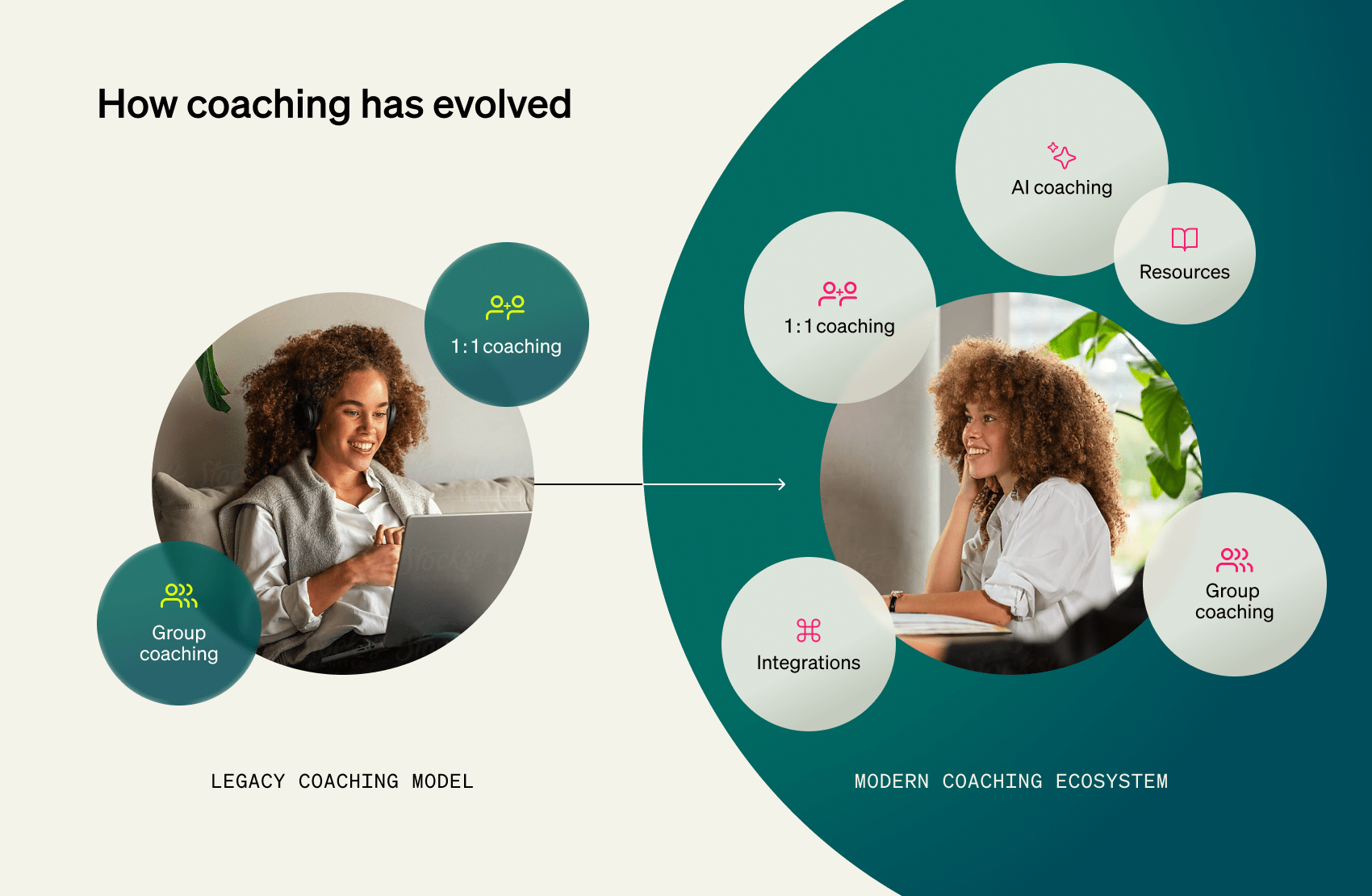
Coaching has evolved from occasional one-on-one sessions into an adaptive system that develops people continuously. Instead of waiting for the next meeting to talk through a challenge, employees now get guidance when it matters most.
Modern coaching now includes artificial intelligence (AI), which works alongside human coaching to create an always-on experience. AI can flag moments of friction, progress, or opportunity with speed and objectivity, while human coaches contribute empathy, accountability, and the kind of judgment that only comes from lived experience. But it’s a mistake to assume everyone wants the same mix.
Some people gravitate toward AI because it feels unbiased, available anytime, and free of judgment. Others rely on human coaches for emotional understanding and real-world wisdom. Many move between the two as their needs shift. Recognizing these differences isn’t a nice-to-have, it’s essential if organizations want to meet a wider spectrum of support needs rather than pushing a default solution.
Our research also complicates the assumption that people will naturally seek out human support. Individuals who hesitate to pursue therapy or coaching often feel more comfortable starting with AI. The private, low-pressure environment gives them space to reflect and lowers the barrier to entry. When combined thoughtfully, AI’s real-time guidance and human coaching’s deeper reflection help people build habits and mindsets that support growth in the messiness of daily work — on their own terms, not ours.
When that shift takes hold at scale, performance rises in ways that echo across the entire business. Organizations see stronger workforce alignment, better collaboration, and higher performance across the board. Coaching becomes less of an exercise and more of an everyday advantage for organizations.
BetterUp’s approach to professional coaching
BetterUp was born out of a simple observation that people do their best work when they’re truly thriving, not just performing on paper. BetterUp's Human Transformation Platform combines one of the world's largest virtual coaching networks with one of the world's largest behavioral datasets in coaching — with millions of data points about behavior change at work.
Other AI coaching tools might target discrete skills, scripts, or issues. BetterUp’s proprietary Whole Person model measures the levers that drive performance, and everything — assessments, human coaching, AI nudges, reporting, etc. — plugs into that. That allows organizational leaders to tie “soft” shifts like emotional regulation and purpose directly to business outcomes.
Let’s dig into how BetterUp coaching works:
BetterUp offers three coaching modalities to serve the full spectrum of developmental needs within your organization.
Together, these three approaches offer a blend of human and AI support that adapts to each member. As needs evolve, the system recalibrates and offers new approaches in response to shifting priorities.
-2.png?width=1200&height=784&name=1%20(1)-2.png)
AI doesn’t replace the coach — it makes coaching smarter. BetterUp’s AI helps match people to the right coach, spot the right moments to intervene, and keep development aligned with what matters most to the business. Think of it as a behind-the-scenes guide that ensures coaching is personal and relevant at every step.
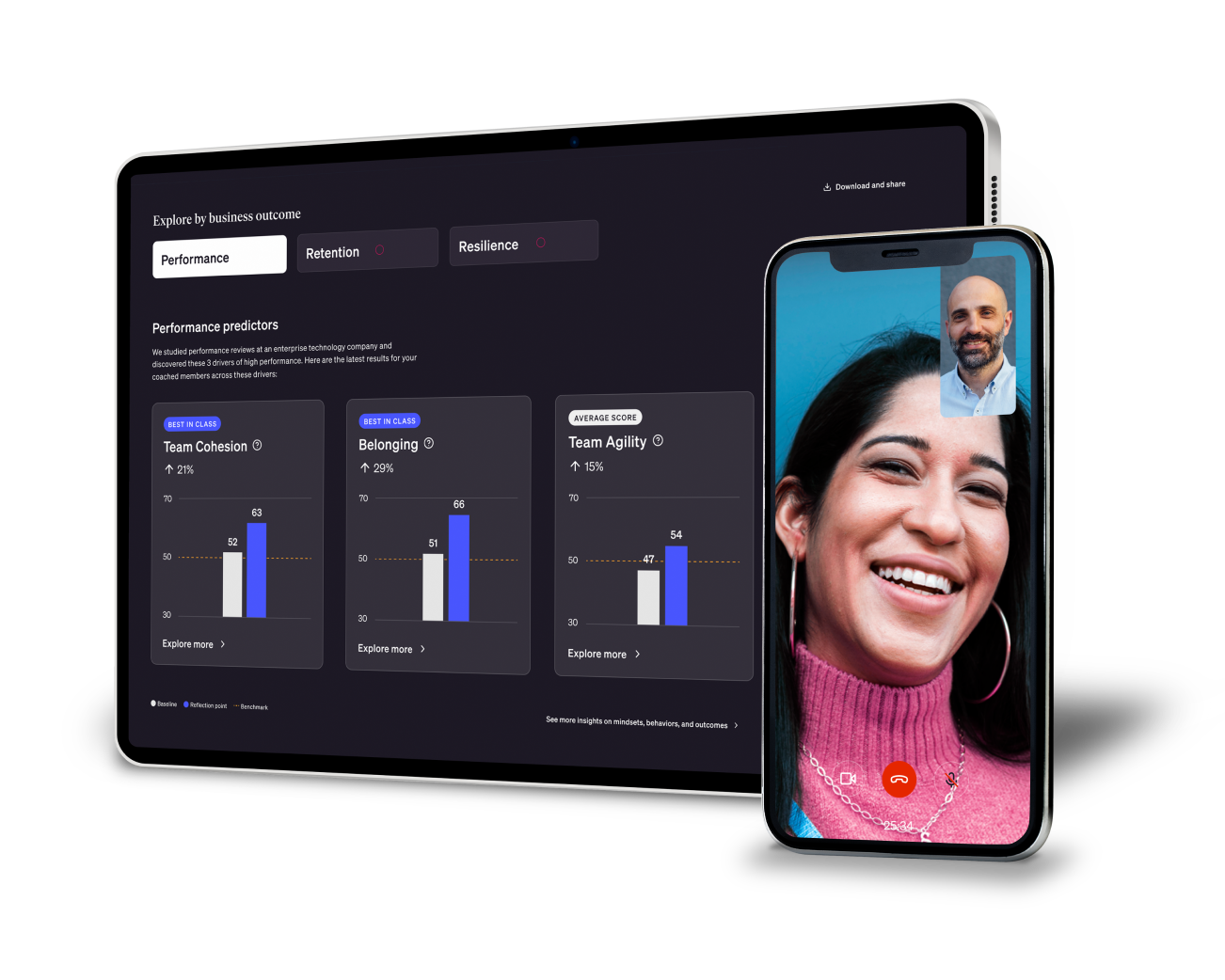
Coaching isn’t just a feel-good investment; it delivers change you can see. At BetterUp, we track outcomes using internal data (BetterUp Labs) and measure impact across thousands of members. Our client case studies show how members’ workplace performance continues to improve. Here are some of the changes we see most often:
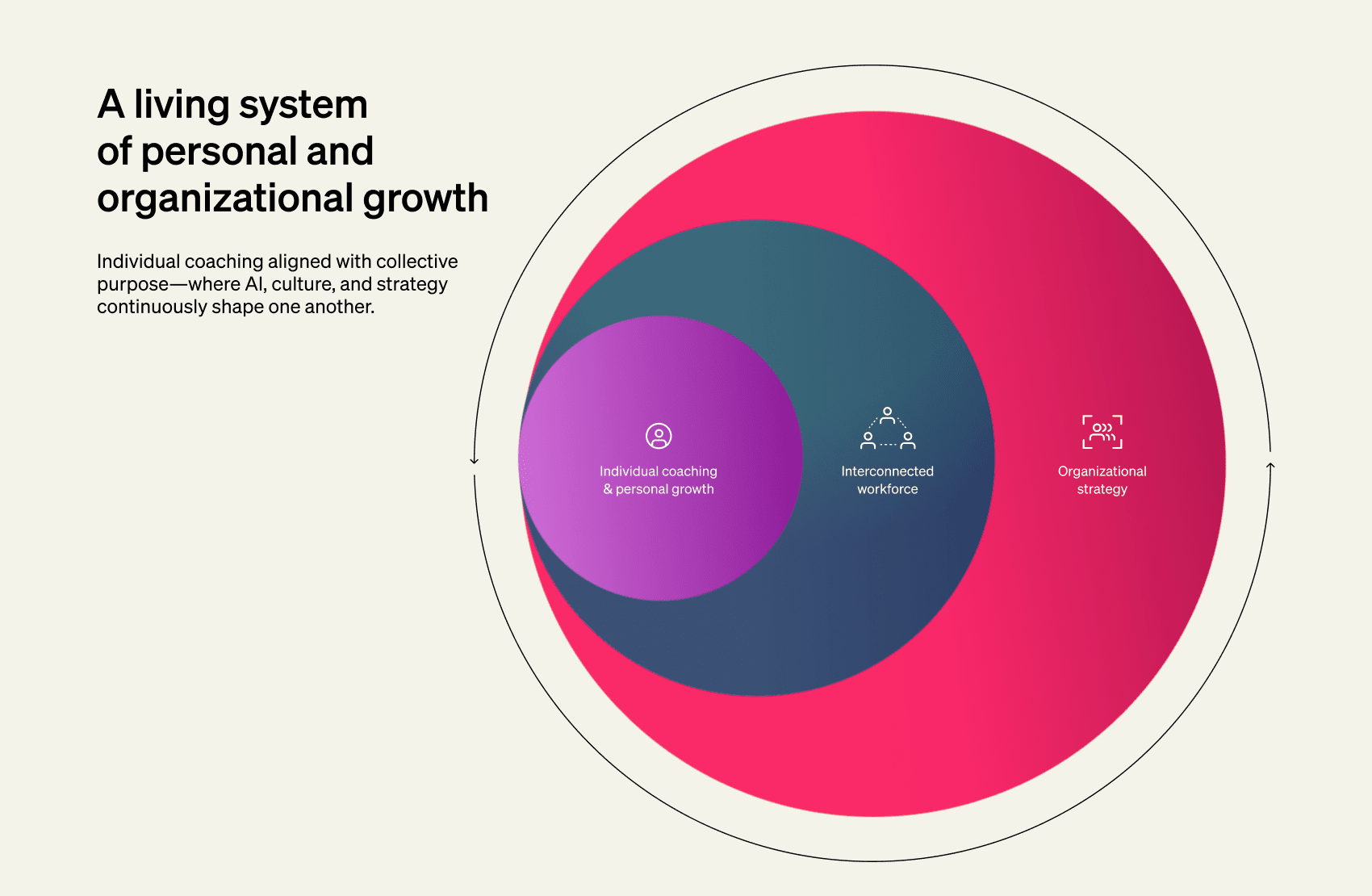
When enough people grow, everything around them starts to shift. Teams get stronger, leaders get sharper, and entire cultures begin to evolve. This is where coaching becomes truly transformational for organizations.
The data back this up. At BetterUp, we’ve seen leaders who score high in emotional regulation lead teams that perform 153% better and who are rated 24% higher in team agility. Sixty-six percent of coached leaders feel better prepared for the next step in their career, and 77% report they’re more effective in their roles.
From a business perspective, that growth adds up. Conservative estimates put the ROI of BetterUp’s enterprise coaching at 3.5X to 5X. And companies that embed coaching into their culture aren’t just seeing better internal outcomes — they’re growing faster, too. In fact, they show 14% higher average five-year revenue growth and 45% higher year-over-year growth than their peers.
When people grow, business grows. And coaching is one of the few levers that unlock both.
When organizations introduce coaching at scale, a few foundational moves can make all the difference. Whether you’re just getting started or evolving an existing program, these practices help ensure your investment in coaching leads to real, lasting impact.
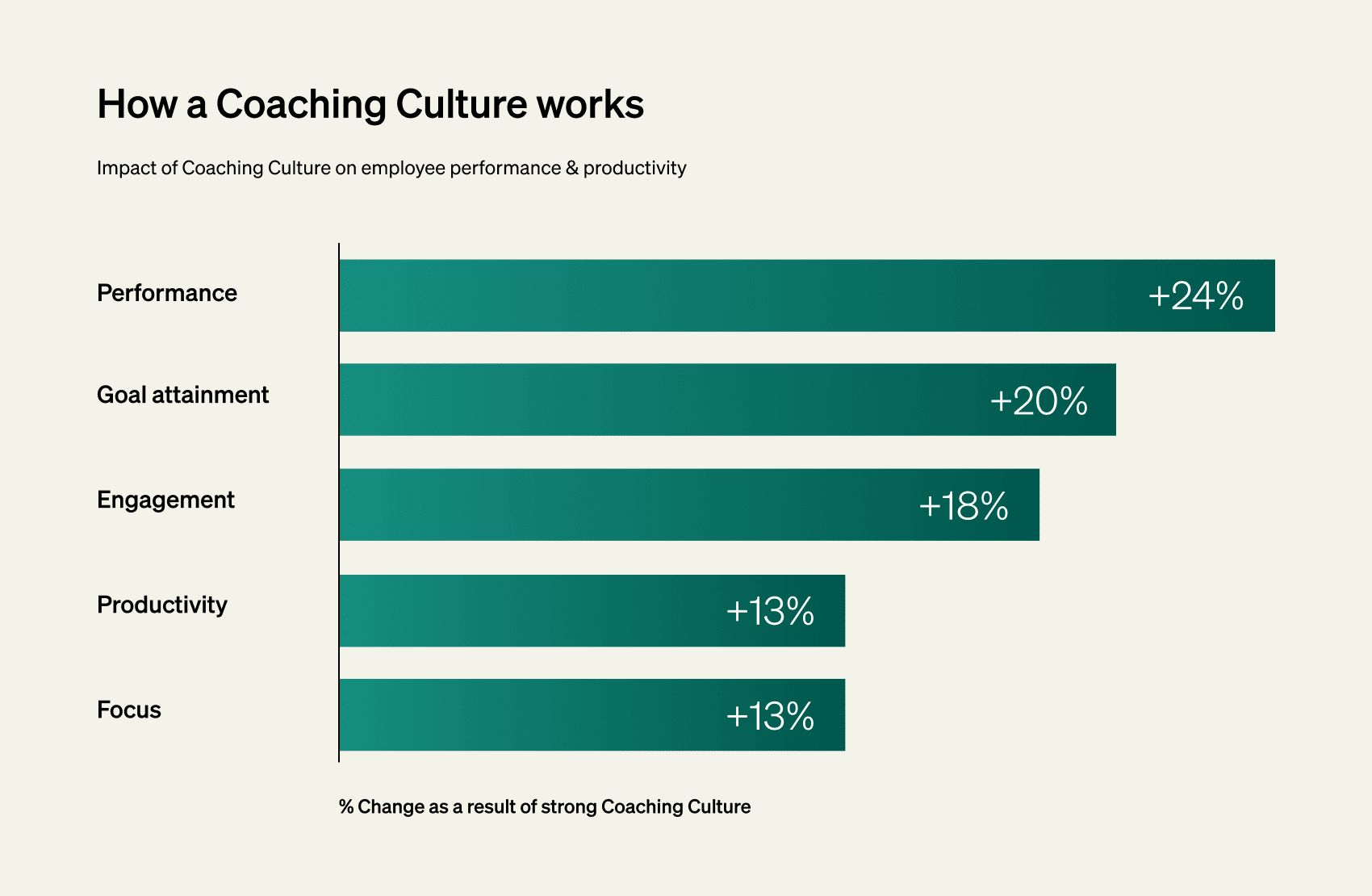
Company culture is the shared values, behaviors, mindsets, and standards that make up a work environment. In many ways, culture is a framework that helps to drive organizational success. A Coaching Culture is one where managers coach their teams, leaders coach mentees, and peers provide healthy feedback and support each other to learn faster. A Coaching Culture also means that coaching practices are integrated into the formal and informal organizational processes and that there is a climate that supports feedback and continuous development at all levels of the organization.

While traditional coaching programs can show positive ROI, organizations with embedded coaching cultures see even greater returns:
By investing in making coaching a sustainable, embedded part of your business, it will deliver dividends way beyond the day-to-day challenges you might be facing.
Coaching isn’t a perk; it’s the operating system for human performance
Many employees already feel like they’re navigating a minefield of workplace volatility, mental health strain, and accelerating disruption. That’s why organizations need a coaching platform that meets employee needs, adapts to their journey, and continuously optimizes based on changing terrain.
BetterUp’s philosophy anchors coaching in the fusion of human wisdom + AI intelligence. And the results are compelling: 2.1X productivity, profound gains in resilience, lower burnout, higher retention, and leadership that is more emotionally agile and strategically aligned.
For CHROs and executives, coaching can be much more than a workforce development tool — it’s the architecture of sustainable growth, performance, and perhaps even human flourishing.
With AI altering the very nature of work, BetterUp Labs research shows a widening gap between organizational ambition and human capacity. Download The Performance Crisis report to understand the decline and the crucial role coaching plays in correcting the curve.